
Collaboration keynote: 10 ideas for better collaboration across departments
When departments mesh well, a lot gets easier: decisions come faster, hand-overs work, and everyone knows what they are building together. A collaboration keynote with ten simple tools your team can use right away.
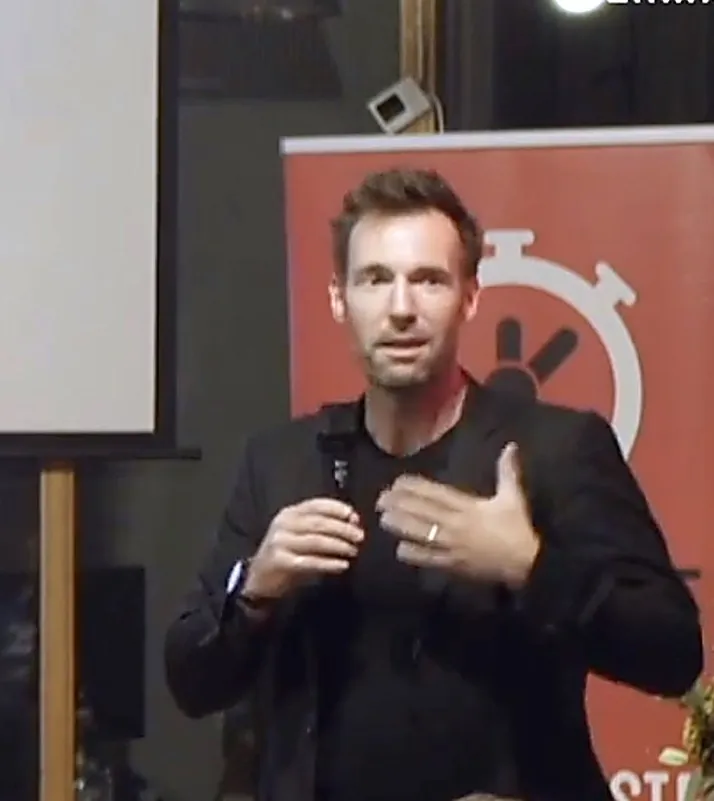
After the talk, your departments work hand in hand
Friction between departments costs time and energy – rarely out of ill will, mostly because roles, hand-overs and priorities were never spelled out. This collaboration keynote makes exactly that visible.
Clear roles
Every task has a name. Everyone knows who owns it and who decides.
Smooth hand-overs
Work moves cleanly from team to team – without loops and follow-up questions.
Shared priorities
Fewer topics at once, but the right ones – backed by everyone.
More trust
Expectations are on the table. That makes every conversation easier.
Ten ideas for collaboration that holds
Each idea brings one insight, one example from everyday work and one short activity in the room. Listening turns into practice straight away.
Clarify roles
One name per task
Where everyone is responsible, in the end no one is. One person owns it, others contribute.
In the room: Three everyday tasks each get one name.
Who decides?
Many conflicts are really open decision rights. Agree who decides up front and save long rounds later.
In the room: An upcoming decision is assigned to one role.
Where my role ends
Boundaries are not a barrier but an invitation to align. Knowing them makes work more relaxed.
In the room: Pairs sketch the interface between their roles.
Design hand-overs
The changeover zone
In a relay, the team that passes the baton cleanly wins. Good hand-overs share a zone instead of throwing work over the wall.
In the room: A typical hand-over is acted out as a baton change.
Done means ready for the next team
A task is only finished when the next department can work with it.
In the room: Agree three criteria for "ready to hand over".
A picture of the result
Teams that see the result through the customer's eyes understand why their part matters.
In the room: Describe the result of one process together in a single sentence.
The short line
Five minutes of talking often replaces ten emails. Short, regular check-ins keep interfaces moving.
In the room: Set a check-in rhythm for one important interface.
Move forward together
Few priorities, shared by all
No more than five priorities create focus – and give every department the same direction.
In the room: Ten topics become three through dot voting on impact and effort.
Stopping is a decision too
What stops makes room for what matters. A stop list relieves more than any new tool.
In the room: Everyone names one thing that can go.
Say expectations out loud
New leader, new team or new task: expectations spoken early prevent misunderstandings later.
In the room: Write three sentences starting with "What I need from you is …".
A collaboration keynote for your event
The ten ideas stay the same; the examples follow your event and your audience.
Leadership meeting and strategy day
All departments pulling in one direction. Focus: roles, decisions and priorities.
Staff event and kick-off
Working better together day to day. Focus: hand-overs, the short line and expectations.
Fresh start and reorganisation
After a restructure, merger or change of leader. Focus: clarifying roles and voicing expectations.
Book a collaboration keynote that fits your event
You choose the setting, Jörn Steinz picks the right ideas. Everything is agreed in a short briefing call.
Short keynote, from 20 minutes
The strongest ideas, to the point – ideal for conferences and leadership meetings.
Interactive, 90 to 120 minutes
All ten ideas with activities in the room – ideal for staff events.
Keynote plus workshop
Afterwards your departments turn the tools into action in a cross-functional collaboration workshop – with clear roles and a 90-day plan.
One arc in five stages
Where does it stick?
A short experiment shows how quickly things get lost at interfaces.
Clarify roles
One name per task, clear decision rights and visible boundaries.
Design hand-overs
Changeover zone, work that is ready to hand over, a picture of the result and the short line.
Move forward together
Few priorities, a stop list and expectations said out loud.
My next step
Everyone agrees one concrete step for their most important interface.
Jörn Steinz works with teams from
More keynotes by Jörn Steinz
Every talk follows the same format: ten ideas people remember – each with a short activity in the room.
Questions about the collaboration keynote
Who is this collaboration keynote for?
For leadership teams, departments and mixed groups from several functions – for everyone who works across interfaces and wants to move faster there.
Is it about my own team or about working across departments?
Mainly about collaboration across departments: roles, hand-overs and shared priorities. The tools work just as well inside one team.
How long is the talk?
Between 20 and 120 minutes – as a short keynote or with plenty of activities in the room. On site or online, in English or German.
Can we go deeper afterwards?
Yes. Your teams can follow up in a cross-functional collaboration workshop on roles, hand-overs and priorities – or agree who owns what in a roles and responsibilities workshop.
How does booking work?
You send us your enquiry, we prepare an offer, and in a short briefing call we tailor the ideas to your audience.
What do you need on site?
A microphone or headset and a projector. Jörn Steinz brings everything else.

Jörn Steinz
Trainer, facilitator and founder of SkillDay. Since 2014 Jörn Steinz has worked with teams and leaders in workshops, and since 2019 with OKRs.
Before that he was a consultant at Accenture and worked in corporate development at XING AG and freenet Group. He holds an MBA from EADA Business School Barcelona. His talks follow one clear format: ten ideas that stick.
Book a collaboration keynote: departments that mesh
Tell us briefly about your event – Jörn Steinz will get back to you personally and agree the ideas with you.
Enquire nowDeutsche Version: Vortrag Zusammenarbeit